Make more of the energy you generate. Store it for later, charge around compatible tariffs and keep designated essentials supported — with HISA Battery Storage.
Starting with solar, or building on what is already there? Choose the architecture that fits your home and installation.
HYBRID · DIRECT PV + AC
HBS-H
HBS-H3.6
Bring solar and storage together.
Connect compatible solar panels directly to the hybrid system, or use an AC-coupled arrangement. A flexible starting point for a carefully designed home-energy system.
Add battery storage on the AC side of a compatible existing PV inverter. Keep solar generation and storage connected through a professionally designed installation.
Choose an HBS-H configuration around your home, your generation and the way you use energy. Your installer will help match the system to the job.
HBS-H3.6
3.68kWh
Usable energy
1 × Unit
HBS-H7.2
7.36kWh
Usable energy
2 × Unit
HBS-H10.8
11.04kWh
Usable energy
3 × Unit
HBS-H14.4
14.72kWh
Usable energy
4 × Unit
HBS-H18.0
18.4kWh
Usable energy
5 × Unit
HBS-H22.8
22.08kWh
Usable energy
6 × Unit
Model names are configuration identifiers; use the stated usable-energy figure, not the model suffix, when comparing capacity.
HBS-H supports up to 6 complete units in parallel. Complete-unit configurations are distinct from battery expansion packs.
Each architecture supports up to 5 applicable battery expansion packs. Compatibility and installation design must be confirmed by your installer.
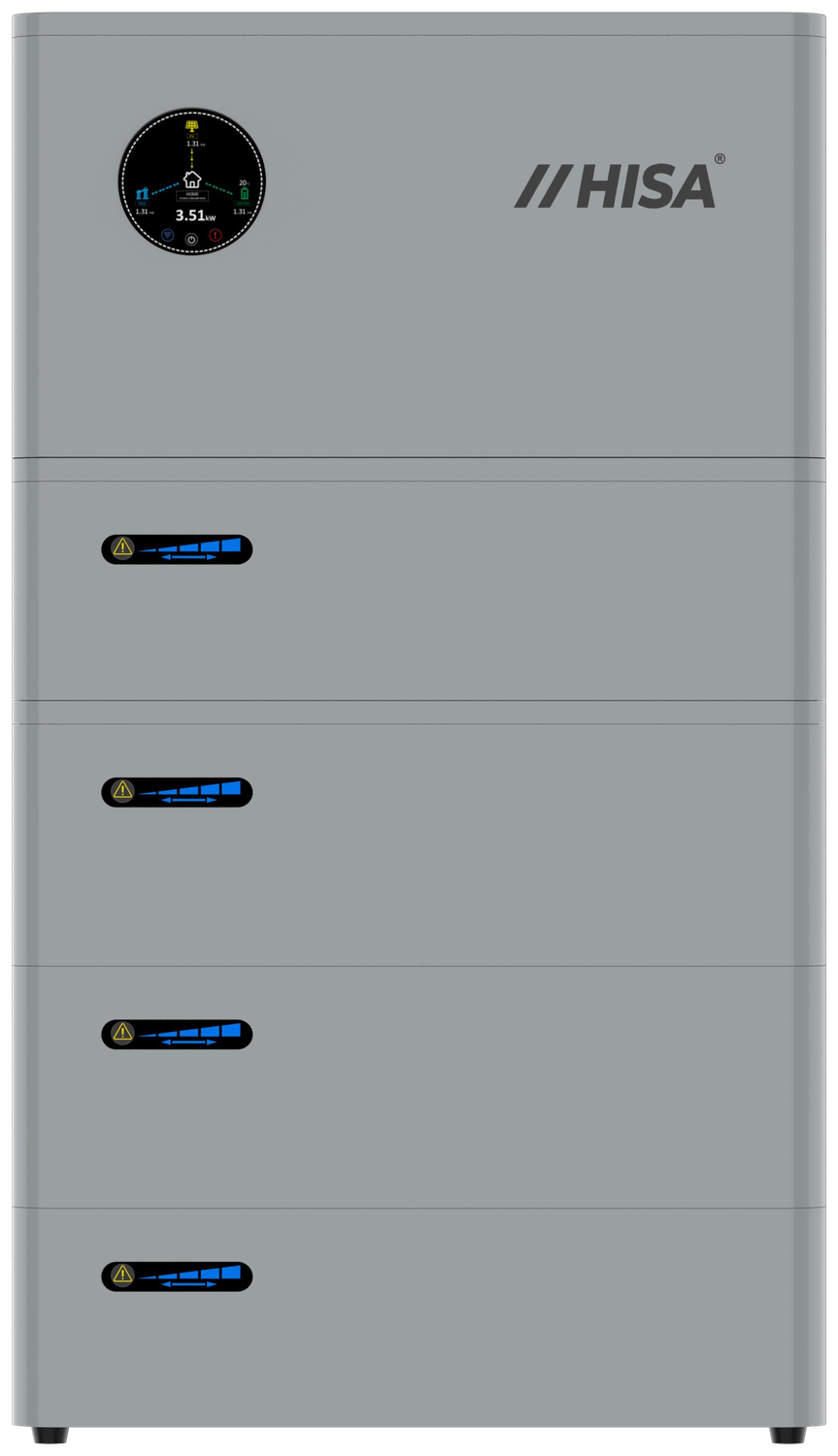
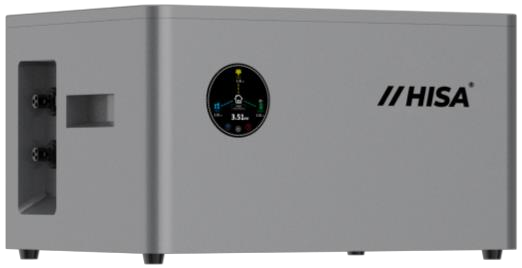
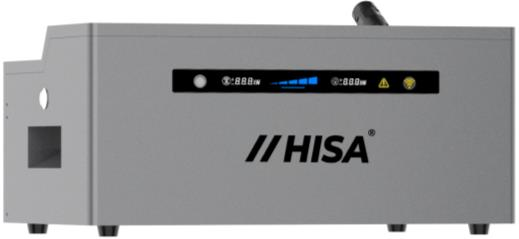
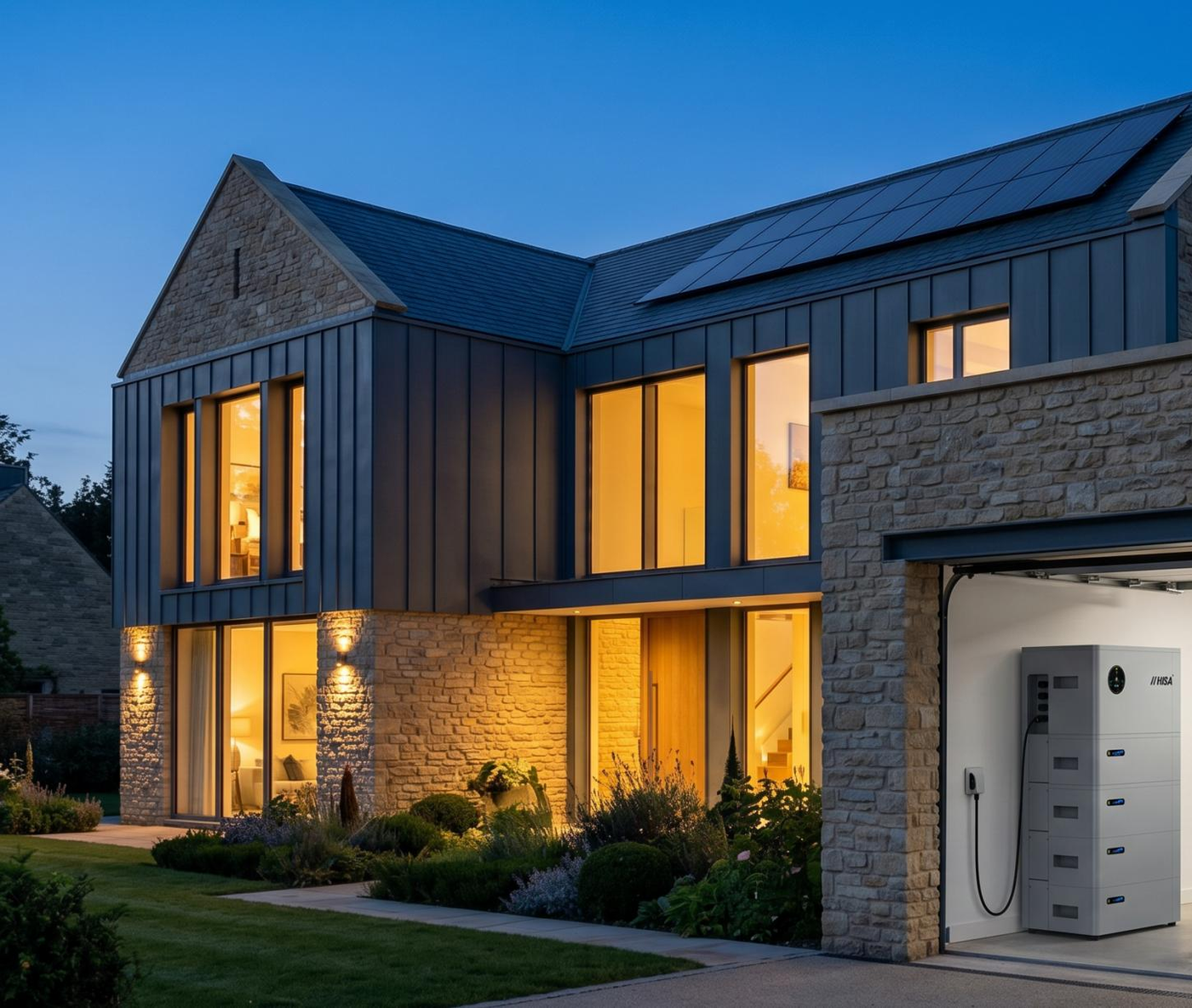
Illustrative HISA modular configuration, not the selected package. Image does not change with selection.Illustrative home-energy setting; installation design varies.
MAKE MORE OF YOUR GENERATION
MADE FOR SOLAR. READY FOR THE GRID.
A sunny afternoon does not have to be the only time you use your solar energy. Store it, then decide when to put it to work.
New solar, a direct route.
HBS-H supports direct PV input from compatible panels, bringing solar and battery storage together.
Existing inverter, a considered fit.
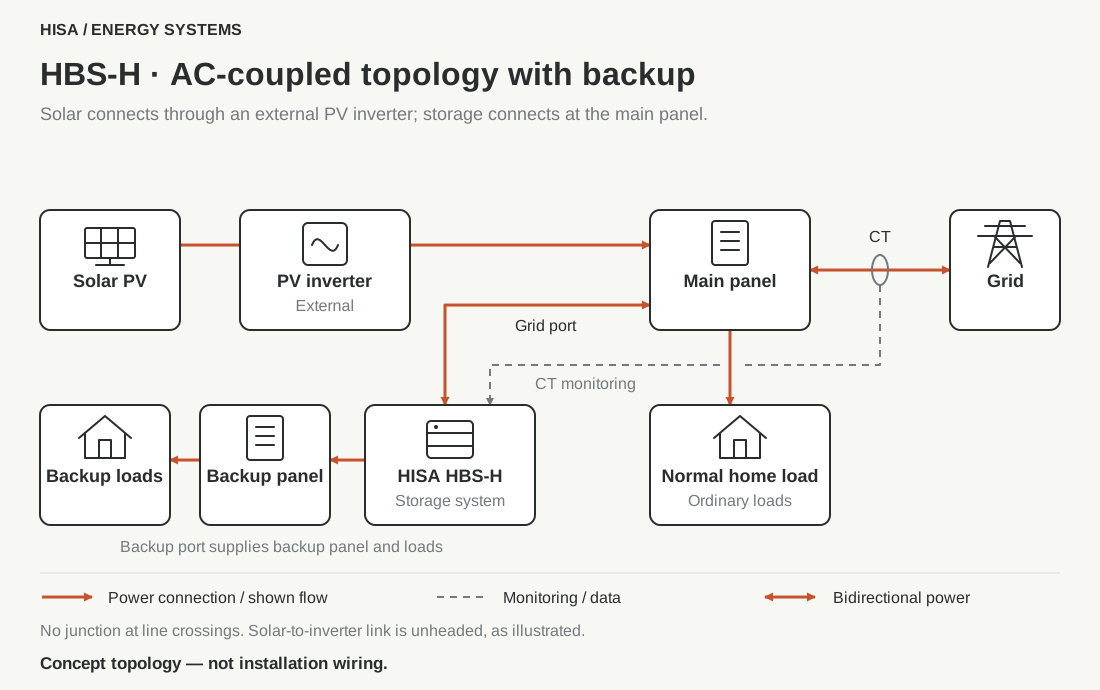
An AC-coupled design connects storage alongside a compatible existing PV inverter. Both HBS-H and HBS-AC support this approach.
A tariff that works with your routine.
Use scheduling with compatible time-of-use or dynamic tariffs. Results depend on the tariff, your generation and how your household uses energy.
THE HISA APP
YOUR ENERGY. IN YOUR HANDS.
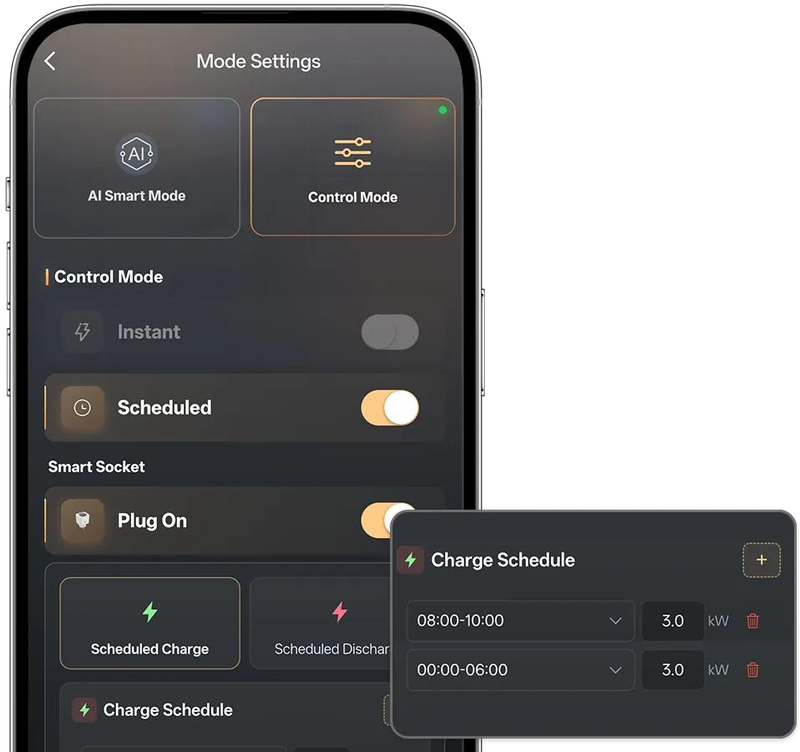
The HISA app supports HBS-H and HBS-AC. See what your system is doing, plan charging and choose how to use your stored energy.
Real-time monitoring
Monitor system performance in real time
Time-of-use scheduling
Schedule energy use around time-of-use tariffs
Dynamic tariff compatibility
Dynamic tariff compatibility
AI energy management
AI forecasting and AI-optimized management
Charging and discharging control
Charging and discharging control
Self-consumption mode
Self-consumption mode
Backup mode
Backup power mode for designated connected loads
Remote monitoring and management
Monitor system performance and manage devices remotely
Tariff features require compatible tariffs and a correctly configured system.
Illustrative supplied HISA app screen; screen values are not product ratings.
DESIGNATED BACKUP LOADS
KEEP THE ESSENTIALS IN MIND.
Both HBS-H and HBS-AC can supply designated loads connected to the backup port, within system limits. Your installer selects and connects the appropriate essential circuits — this is not a whole-home backup promise.
Rated backup output
2400 VA
Peak backup output
4800 VA5 seconds
Typical transfer time
10 msTypical value
A considered fit for your space.
IP65 protection and natural cooling give installation flexibility. A qualified installer must check siting, temperature limits and local conditions; not every outdoor environment is suitable.
THE DETAILS, WITHOUT THE GUESSWORK
KNOW YOUR SYSTEM.
Model-specific specifications, grouped for clarity. Choose your architecture to explore the base unit and its system topology.
HBS-H maximum efficiency is a stated source value, not a round-trip efficiency rating. HBS-AC lists inversion efficiency, also not round-trip efficiency.
HOW IT CONNECTS
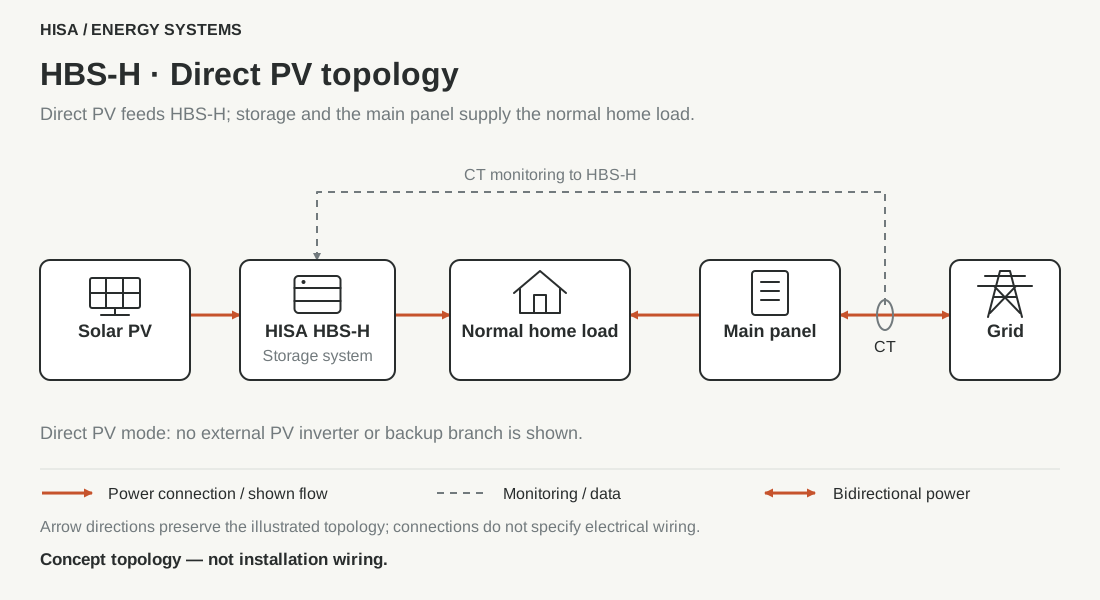
HBS-H · direct PV example
Conceptual source-based system topology, not installation wiring.
Direct PV example. This source view does not illustrate the backup branch. Concept topology only, not installation wiring.
HBS-H maximum efficiency is a stated source value, not a round-trip efficiency rating. HBS-AC lists inversion efficiency, also not round-trip efficiency.
HOW IT CONNECTS
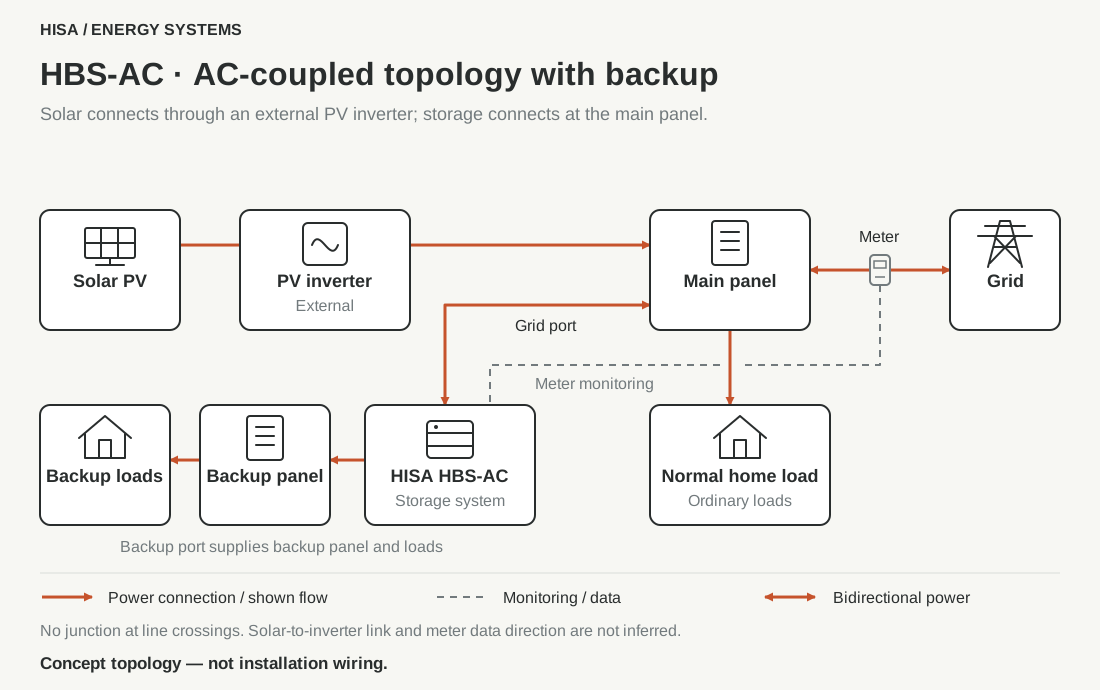
HBS-AC · AC-coupled example with backup
Conceptual source-based system topology, not installation wiring.
Existing PV inverter, metering, normal loads and a separate backup panel. Concept topology only, not installation wiring.